ESG AND CLIMATE TRANSITION
Quayside has spent the past two years responding to the requirements of the Climate- Related Disclosures framework. That work has strengthened our understanding of where climate-related risks and opportunities are most material across the portfolio, particularly in relation to real assets, investment manager practices, insurance, regulation and long-term asset values.
In late 2025 the New Zealand Government confirmed that the mandatory climate reporting threshold for listed issuers would rise to $1 billion, taking Quayside out of scope. Ahead of the enabling legislation, the Financial Markets Authority has adopted a no-action approach, and Quayside is not preparing a mandatory climate statement for the year ended 30 June 2026.
While the obligation to report has changed, the need to manage material climate- related financial risk has not. This shift has allowed us to focus our climate-related work on the area’s most relevant to investment decision-making, capital preservation, portfolio resilience and sustainable distributions to Bay of Plenty Regional Council.
This is a deliberate change in emphasis to a risk framework built to protect capital applying climate-related insight where it is most decision-useful and where it best supports Quayside’s long-term, intergenerational investment mandate.
Retaining what protects long-term value
Several elements of the existing programme are fundamental to sound investment and risk management and will continue.
First, Quayside maintains a Climate Risk Register as a core internal control, providing an ongoing view of material physical and transition risks across the portfolio and ensuring emerging risks are actively monitored and managed.
Second, the organisation continues physical-risk assessments across the material holdings in its real-asset portfolio, including exposure to flooding, coastal erosion and other relevant hazards. These assessments directly inform insurance, capital expenditure planning and asset-management decisions, and are essential to protecting long-term balance-sheet resilience.
Third, climate considerations remain embedded in investment (active) manager selection and monitoring. Managers are assessed on a materiality basis, using established industry frameworks, with attention concentrated on the exposures that account for the majority of assets under management in each class.
Finally, Quayside continues to use emissions and carbon data, but with a more targeted purpose. Rather than aggregating portfolio-wide metrics for disclosure, this information is used through targeted screening of the highest-emitting exposures to assess potential exposure to regulation, carbon pricing and transition-related impacts on company performance.
A more targeted approach
Alongside these retained elements, Quayside has refocused its effort so that climate activity is proportionate and decision useful. Analysis is directed toward identifying the assets and sectors most exposed to physical damage or to becoming “stranded” as the economy transitions. Rather than managing to an absolute portfolio carbon figure, Quayside assesses whether an asset is at risk of losing value before the end of its economic life, and whether its risk-adjusted return remains acceptable.
Consistent with this, the revised Climate Transition Plan approved by the Board in March 2026 moves away from a fixed long-term portfolio emissions reduction target, replacing it with a qualitative stranded-asset risk appetite.
Full-portfolio carbon aggregation and external assurance over climate disclosures have been discontinued, as activities designed primarily to support external reporting rather than investment decision-making. This is a reallocation of effort toward what most directly protects capital and income, not a lower priority on climate risk.
Climate-related risks continue to be managed through Quayside’s broader risk-management and investment frameworks. Material risks are monitored through the Climate Risk Register and considered as part of relevant investment, insurance, capital-planning and asset-management decisions. Where climate-related matters are material to portfolio value, resilience or strategic decision-making, they are reported through established governance channels, including the Board and its Audit and Risk Committee.
Aligning ESG with an intergenerational mandate
Quayside’s evolution in this area is grounded in its role as a long-term, intergenerational investor. Climate risk is expected to influence asset values, earnings resilience and insurance availability over time, and managing it well remains essential to maintaining a sustainable distribution to Bay of Plenty Regional Council and supporting regional prosperity.
By moving from mandatory disclosure to targeted climate risk management, Quayside is reinforcing a consistent position: climate and ESG considerations add the most value when integrated into core investment processes rather than treated as an overlay. This allows the organisation to continue acting responsibly while keeping a clear focus on its primary objective to grow and protect the value of the portfolio for current and future generations.
RISK MANAGEMENT
Returns don’t come from avoiding risk. They come from managing it. As Quayside continues to grow and diversify its portfolio, the organisation has strengthened its approach to risk management, embedding clearer frameworks, stronger governance and more disciplined decision-making to safeguard long-term value for the Bay of Plenty.
Strengthening risk discipline
The Audit and Risk Committee has always provided oversight of Quayside’s key risks, including financial, operational, cyber and climate-related risks. Over recent years, the ARC, together with the Board, has led a deliberate strengthening of Quayside’s risk discipline, with a greater focus on how risks are identified, assessed, managed and governed in practice.
Today, risk frameworks are embedded across business decisions, controls are regularly tested and strengthened, and external reviews are used to drive continuous improvement.
This has marked an important step in Quayside’s risk maturity. The organisation has moved beyond building the systems and processes required to support growth and is now using them to inform decisions, test assumptions, and manage risk more consistently.
With 70% growth assets and 30% defensive assets, the Reference Portfolio reflects Quayside’s intergenerational mandate by accepting short-term volatility in pursuit of stronger long-term returns. It also provides a clear benchmark for assessing portfolio risk and performance through market cycles.
During FY26, Quayside continued to embed the Reference Portfolio as a core reference point for investment decision-making, monitoring and governance.
While it defines the strategic level of risk, Quayside may deviate from this position where there is a clear expectation of improved risk-adjusted returns, with such deviations undertaken in a deliberate and governed manner.
The Reference Portfolio role in risk
A central component of Quayside’s risk framework is the Reference Portfolio, approved and operational from FY25. It defines the baseline level of investment risk required to support Quayside’s long-term objectives and anchors portfolio construction, monitoring and governance over time.
A policy-driven approach
A defining feature of Quayside’s maturing risk capability is the increasing emphasis on policy-driven decision making. Significant work has been undertaken to align and integrate:
- the Statement of Investment Policies and Objectives
- treasury and liquidity settings
- distribution policy
Governance and the three lines of defence
Strong governance remains fundamental to Quayside’s risk maturity. The organisation operates a three-lines of defence model, ensuring clear accountability and independent oversight:
- First line – Investment, Rangiuru Business Park and operational teams Responsible for identifying and managing risks
- Second line – Internal risk and control functions Provide oversight, challenge and guidance, supported by external expertise
- Third line – Internal Audit Provides independent assurance over the effectiveness of controls
Internal Audit plays a critical role in supporting the ARC. It is carried out internally, with third-party support where required, providing objective insight into whether frameworks and controls are operating as intended and identifying areas for improvement.
Positioned for long-term resilience
Quayside has made significant progress in building a mature and disciplined risk management capability. The evolution of the ARC, Investment Committee and Board, together with enhancements to the SIPO, Investment Risk Framework, and governance and assurance framework, has strengthened Quayside’s ability to effectively identify, assess and manage risk.
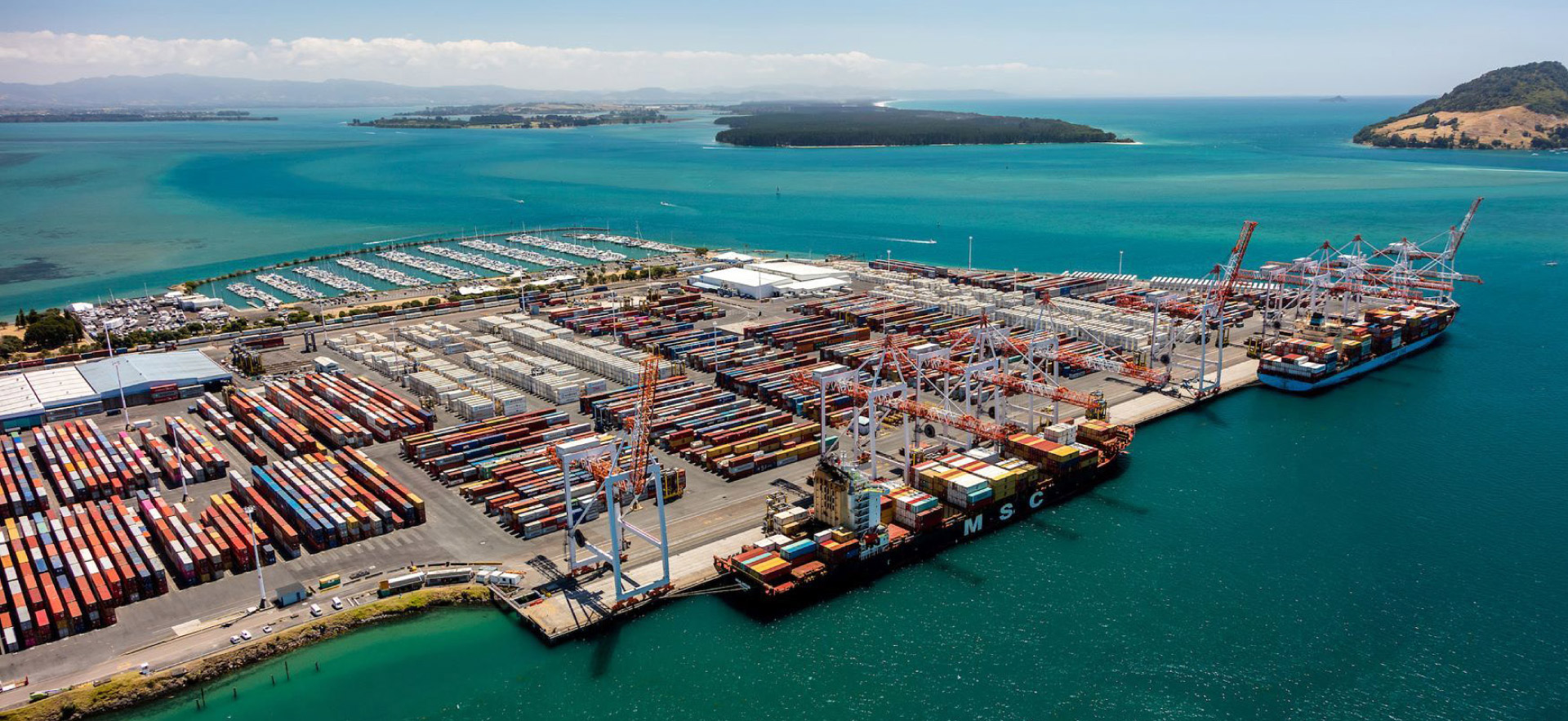
A key risk remains portfolio concentration, particularly Quayside’s exposure to the Port of Tauranga. Addressing this risk remains a strategic priority, and the potential partial sell-down of this asset provides an opportunity to improve diversification, rebalance risk and further strengthen long-term resilience.
In an environment of increasing uncertainty, this disciplined and forward-looking approach remains central to protecting real capital, sustaining distributions, and delivering long-term value for the region.