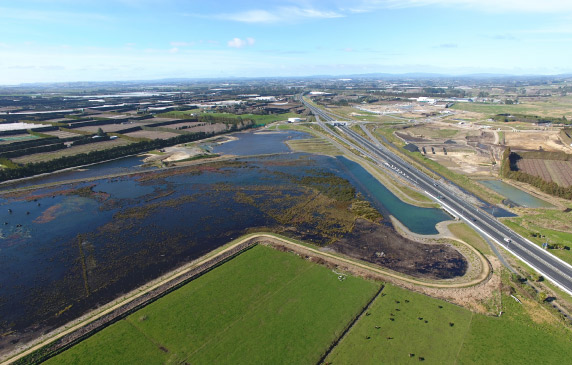
Building capacity for New Zealand’s future
The Port of Tauranga is currently the largest investment in Quayside’s portfolio, comprising over 85% of the total portfolio at 30 June 2026. Even following a sell-down, Quayside will retain a substantial shareholding and remain a major long-term investor in the Port. It is also one of New Zealand’s most important pieces of economic infrastructure and one of regional significance for the Bay of Plenty. Every day, the Port connects New Zealand producers to international markets, supports the flow of essential imports, and is foundational to the resilience of our national supply chain.
As trade patterns evolve and freight networks become increasingly interconnected, the Port’s future value lies in its ability to strengthen New Zealand’s entire logistics system. Through investment in capacity, technology, environmental performance and supply chain integration, the Port of Tauranga is positioning itself to support New Zealand’s economic growth for decades to come.
The Impact on NZ Inc.
Often referred to as NZ Inc., New Zealand’s economy relies on a connected system of exporters, producers, freight operators, infrastructure assets and global trade networks working together to move goods to international markets. Port of Tauranga is a vital part of that system. As New Zealand’s largest port, it helps connect businesses across the country with the world, supporting trade competitiveness, supply chain resilience and economic activity far beyond the Bay of Plenty.
Through long-term partnerships with major exporters and freight operators such as Kotahi, products from across the country are consolidated and connected to international
markets efficiently and reliably. Kotahi represents Fonterra, Silver Fern Farms and more than 50 primary sector exporters, together accounting for approximately one-third of New Zealand’s containerised exports.
The kiwifruit industry provides another example of the Port’s contribution to NZ Inc. Zespri recently launched its 2035 strategy, which is focused on growing international demand, strengthening supply chain resilience and expanding market presence around the world. Achieving these ambitions relies on a trade network capable of moving increasing volumes of high-value exports efficiently and reliably.
Port of Tauranga Supporting NZ Inc.
0
%
of New Zealand cargo by volume
0
%
of New Zealand container trade
0
%
of New Zealand exports by value
0
%
of New Zealand imports by value
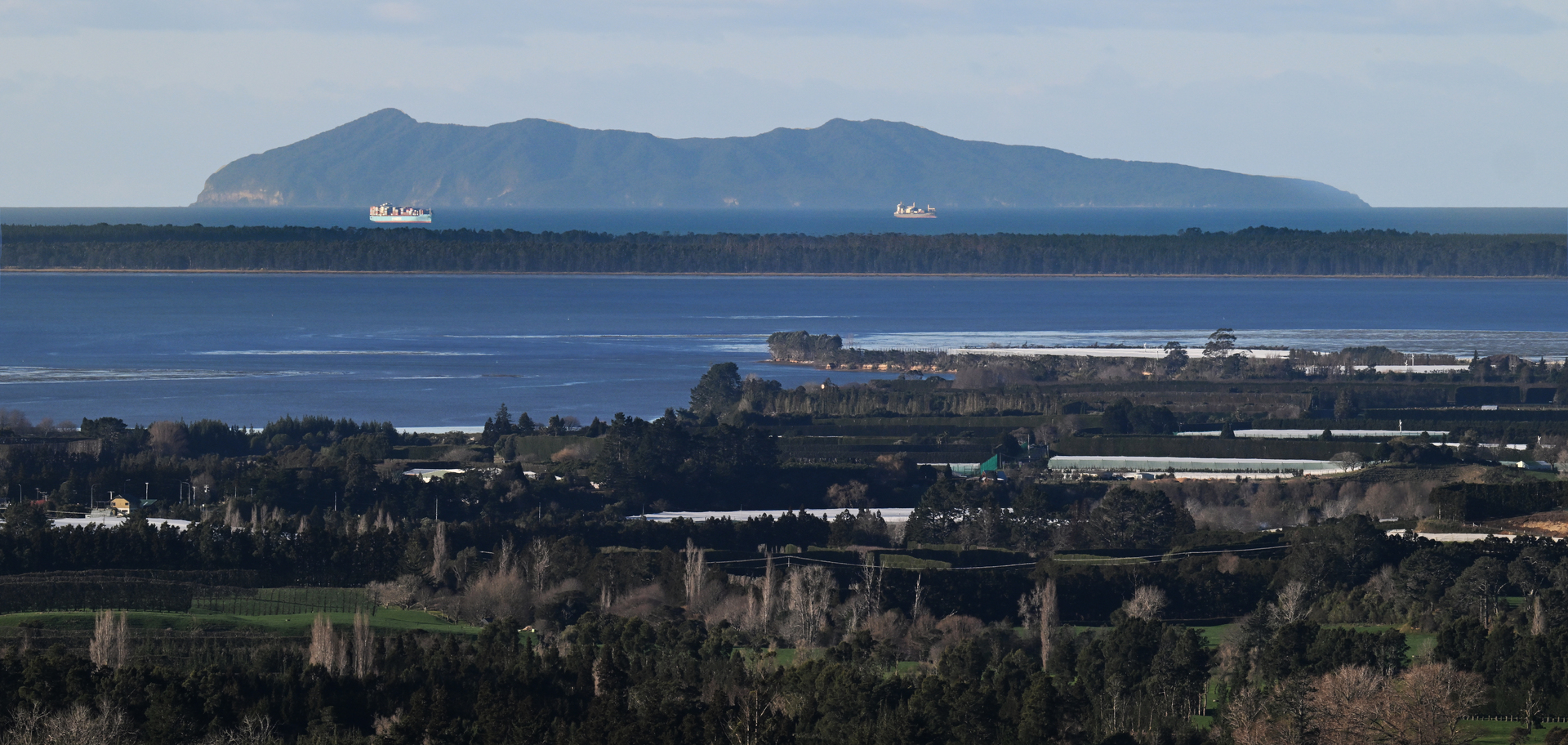
The Future of Port of Tauranga
As trade volumes grow and supply chains evolve, Port of Tauranga is positioning itself for the next chapter of New Zealand’s trade future. Infrastructure investment, expanded shipping capacity, and networks are designed to strengthen the Port’s role as a nationally significant freight hub, creating the foundations for greater resilience, efficiency and long-term economic growth.
As New Zealand’s largest freight gateway, investment in additional berth capacity is not simply a Port initiative. It is a response to growing pressure across the national supply chain and the need to support future export growth, trade resilience and international connectivity.
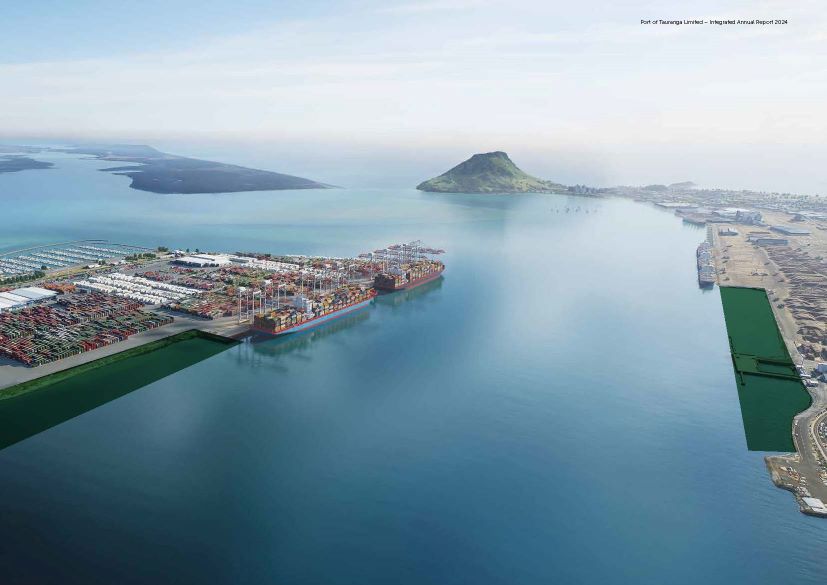
Stella Passage: enabling capacity & trade
Stella Passage is a key component that has the ability to unlock greater capacity and value. The project proposes extending the Sulphur Point container berth by 385 metres and the Mount Maunganui wharves by 315 metres within the Port’s existing footprint, alongside associated reclamation and dredging works.
The need for additional capacity is immediate. Existing berth constraints are increasingly limiting the Port’s ability to accommodate additional shipping services & efficiently support future growth in trade volumes. Stella Passage provides the critical link between today’s limitations and tomorrow’s opportunities.
The project also aligns with broader investments aimed at enhancing productivity throughout the supply chain. Stage 2 of the Port’s consented capital dredging programme is underway to deepen and widen shipping channels within Te Awanui Tauranga Harbour, enabling access for larger vessels such as the next generation of Post-Panamax container vessels.
The Stella Passage development will help position New Zealand’s freight network to accommodate larger vessels over time, supporting greater shipping efficiency, improved connectivity to key export markets and lower emissions per unit of freight transported.
Hub & Spoke Model
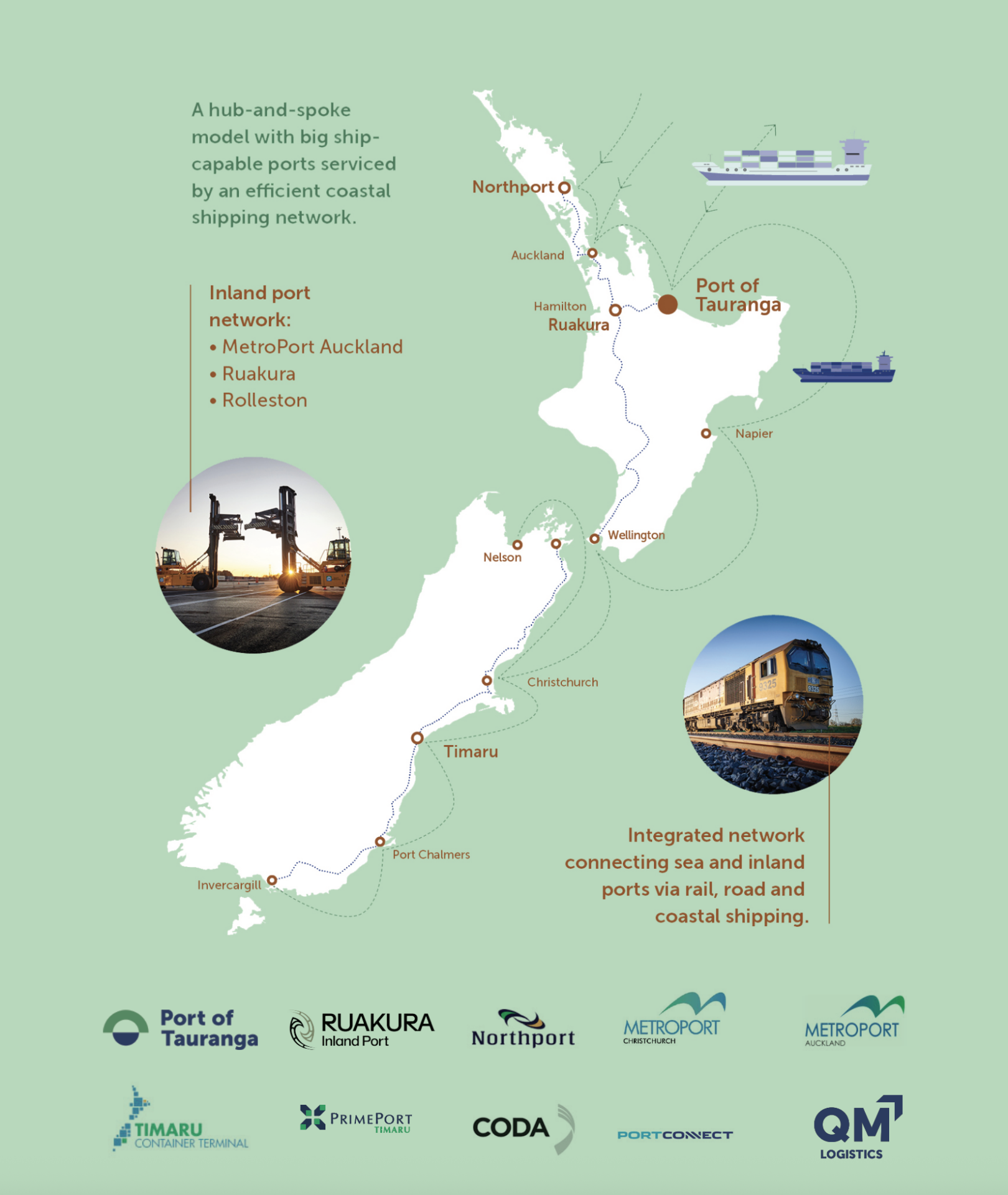
Hub and Spoke Model Industry trends also point towards an emerging hub-and-spoke model across Oceania. Under this approach, a small number of major international container terminals would be supported by regional feeder ports connected through coastal shipping and inland freight networks. Many industry participants view this evolution as a natural response to growing trade volumes, emissions reduction requirements and changing shipping economics.
Port of Tauranga is uniquely positioned to play a leading role in this transition. Its deepwater capability, inland freight infrastructure, rail connectivity and national logistics network provide a strong foundation to support larger vessels, increased transhipment volumes and greater supply chain resilience. Additional capacity also provides operational flexibility and resilience, helping accommodate fluctuations in trade volumes, vessel schedules and future freight demand.
Stella Passage is viewed by many industry participants as an important enabler of this evolution, helping ensure New Zealand’s freight network can accommodate changing vessel deployment patterns while supporting greater use of inland freight hubs and coastal shipping connections.
Building a Network
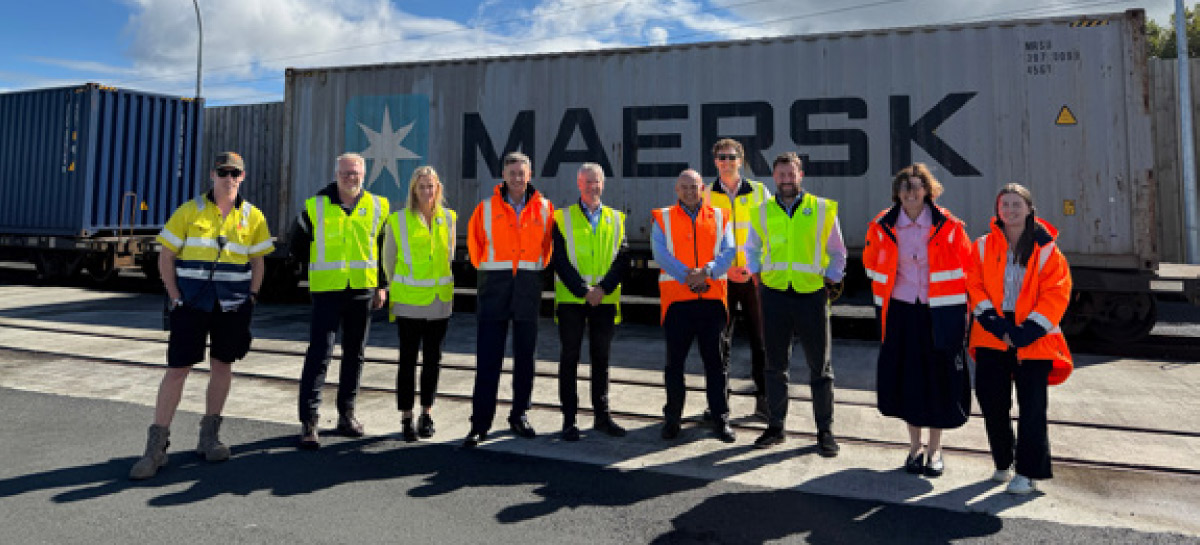
The Port is building a network rather than simply expanding a port. Investments such as Ruakura Inland Port, Timaru and Northport support a long-term strategy focused on integrating regional freight movements into a more efficient national system. Ruakura Inland Port, developed in partnership with Tainui Group Holdings, has become a significant inland freight hub since opening in 2023 and illustrates how inland terminals can support growth while reducing pressure on traditional port infrastructure.
Northport further strengthens optionality within the Upper North Island freight network, creating opportunities to support future trade growth through improved collaboration and investment across multiple locations.
Growing value beyond financial returns
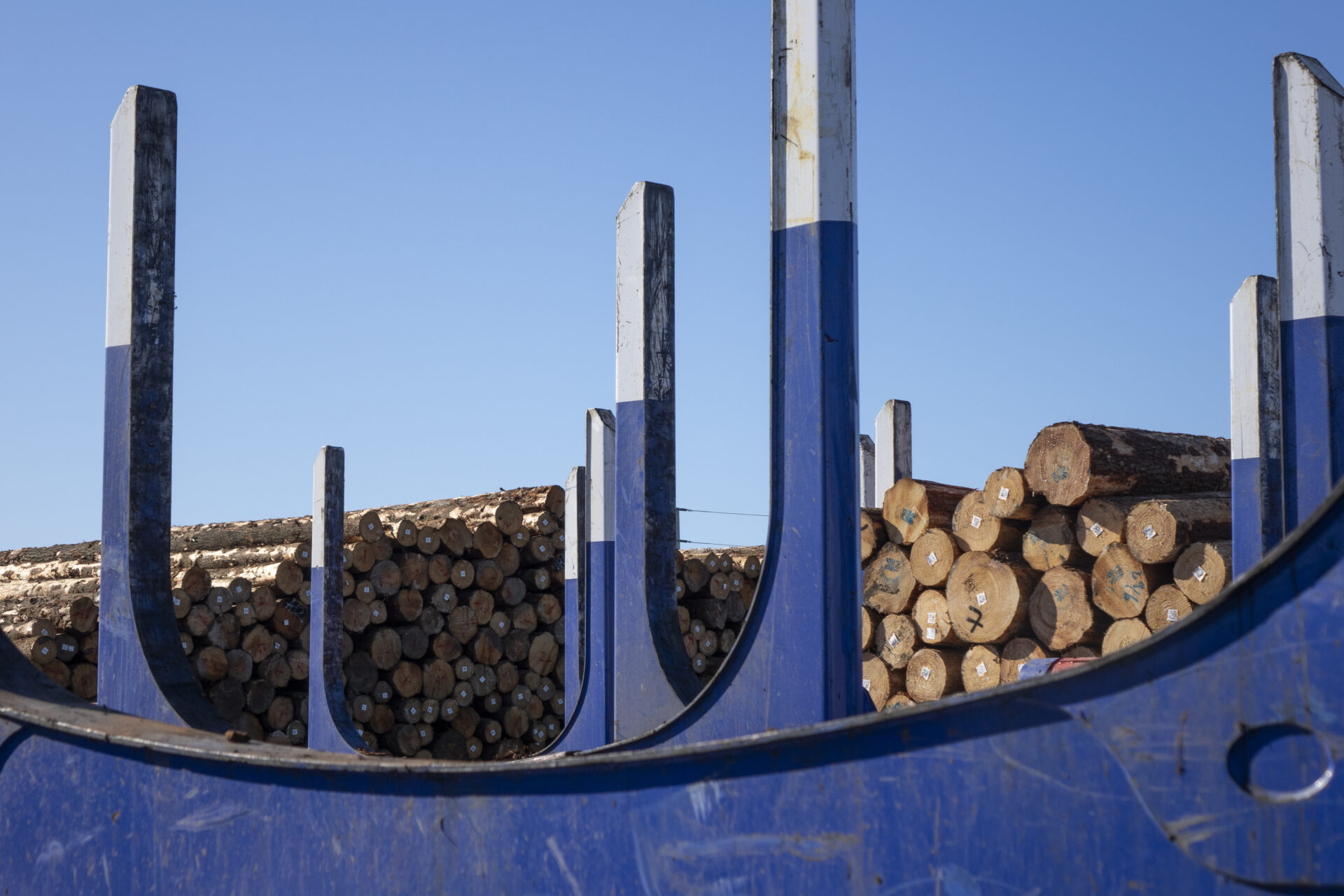
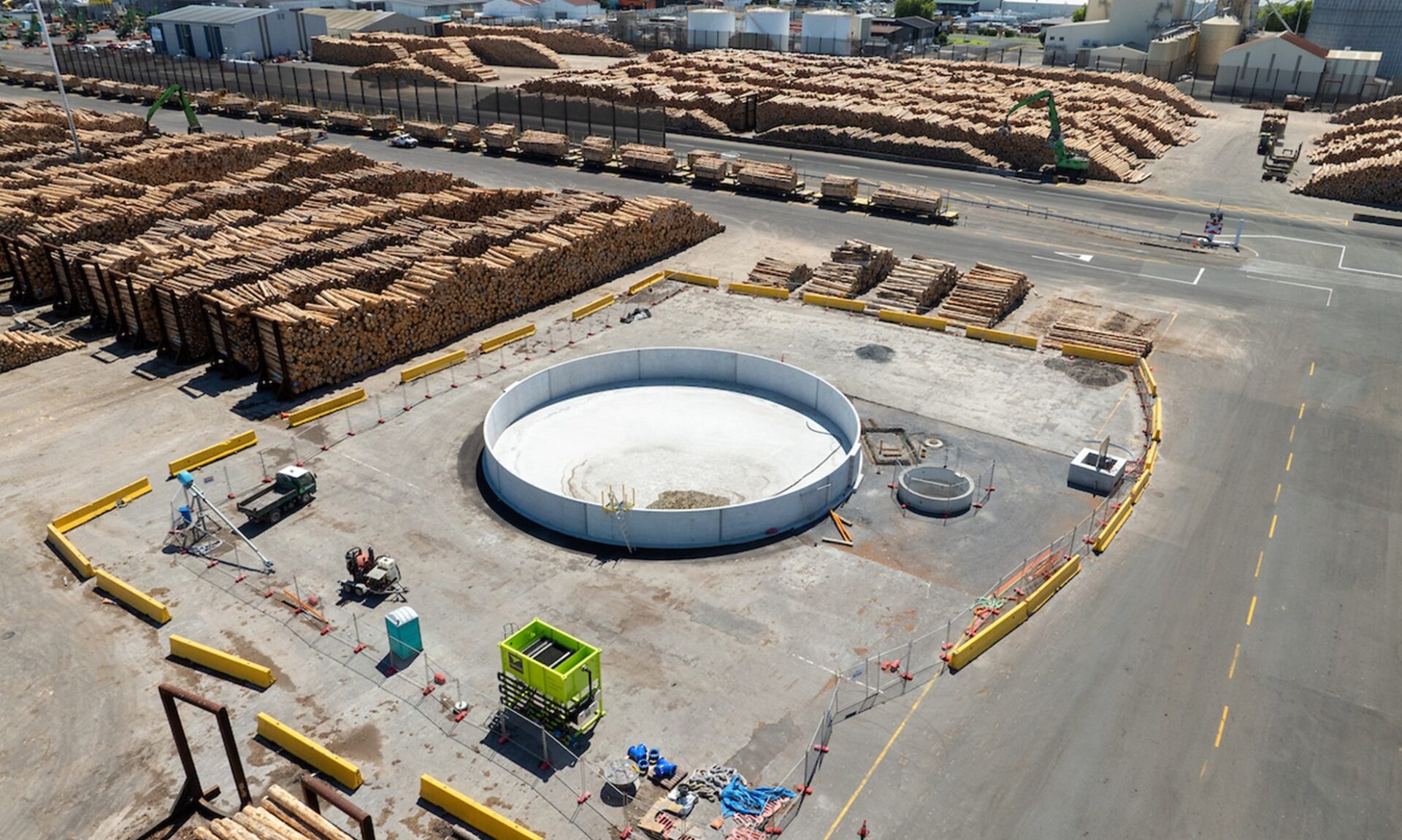
In April 2026, the Port completed a new stormwater treatment facility at the Mount Maunganui wharves. The system includes a one-million-litre storage tank designed to capture and treat runoff from the log yard before it enters Te Awanui Tauranga Harbour. Using first-flush capture technology, real-time monitoring systems and high-capacity pumping infrastructure, the facility is specifically designed to improve stormwater quality in a complex port environment.
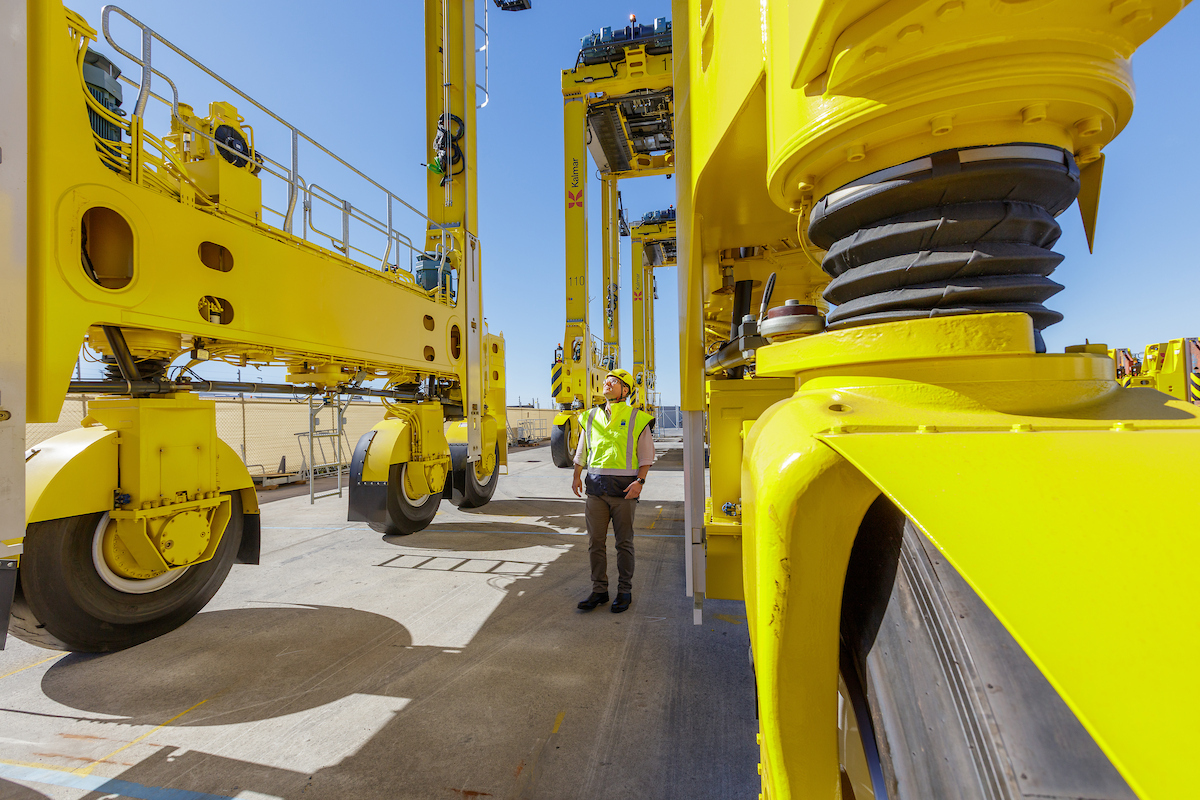
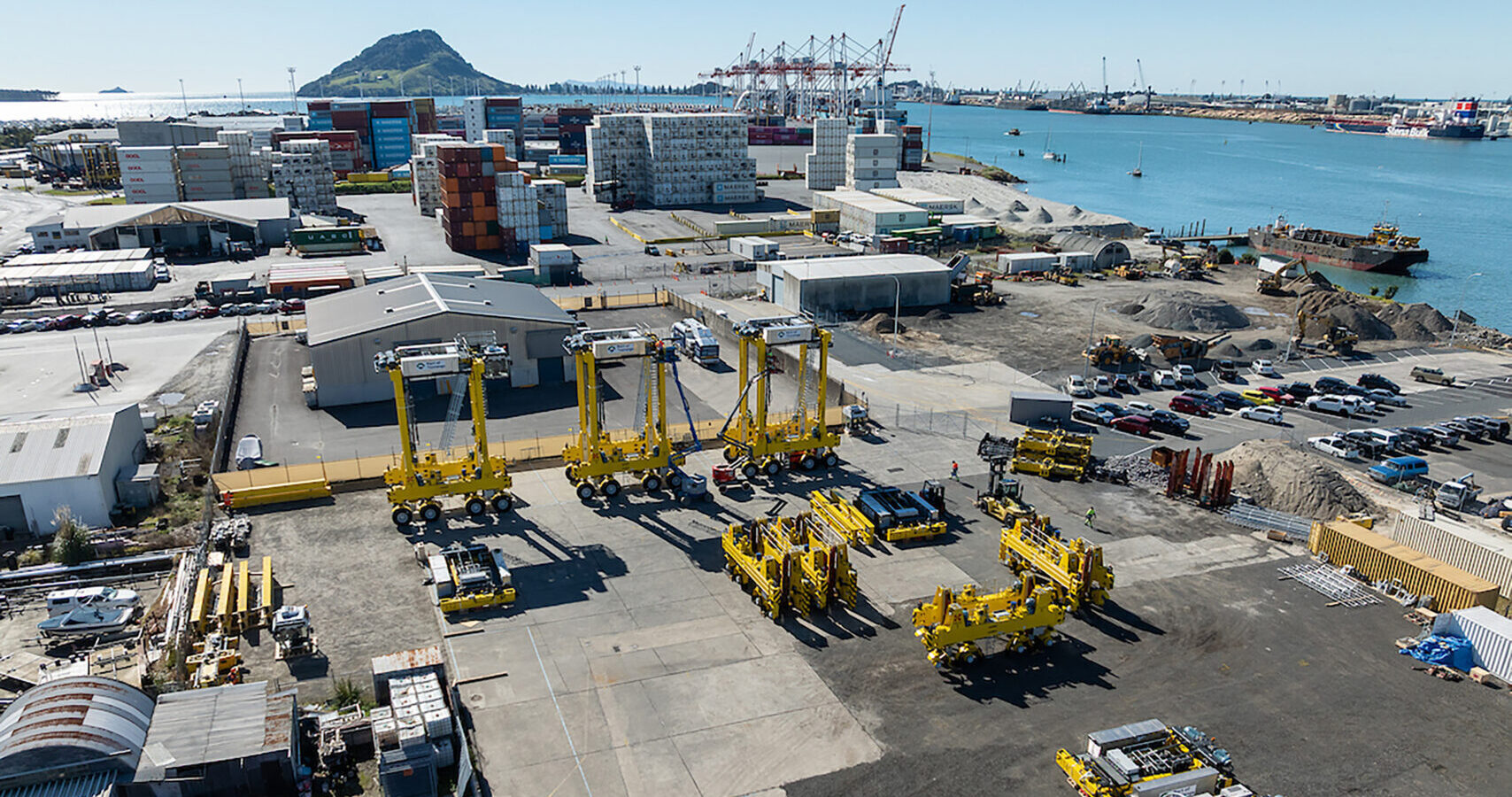
The Port is investing in fully electric automated stacking cranes, which are expected to double the current container throughput, improve workplace safety and reduce carbon emissions by approximately 75% compared with a traditional straddle carrier operation. Also supporting the reduction in the Port’s Scope 1 emissions. Many of these productivity and emissions-reduction initiatives are interconnected, with additional berth capacity providing the platform for future terminal automation and more efficient cargo handling.
Digital twin technologies continue to advance terminal emulation and provide operational gains. Automated planning strategies now manage a growing proportion of yard operations, while targeted optimisation has reduced the number of refrigerated container rehandling movements – supporting greater productivity, reduced fuel use and more efficient use of existing infrastructure.
TOTAL SHAREHOLDER
RETURN
0
%
Port of Tauranga delivered a Total Shareholder Return (TSR) of 32.85%, driven by share price appreciation to $8.9 (at 30 June 2026) and the semi-annual distribution.
Trading Performance and Market Confidence
Financially, the Port delivered a strong result, with Group Net Profit After Tax reaching $156.1 million for the year ended 30 June 2026. Revenue increased to $486.5 million, up 4.7% on the prior year. Investor confidence remains high, with the Port continuing to trade at a premium to its sector peers, reflecting its strong fundamentals, strategic positioning and disciplined capital management.
Governance
Quayside is the majority shareholder in the Port and while the Port operates independently as an NZX-listed company, Quayside fulfils its duties as a responsible long-term shareholder through strong governance, performance monitoring, strategic oversight and ongoing regular engagement.
Financial Performance
- TEUs increased by 0.4% to 1,213,494
- Total trade decreased 3.0% to 24.560 million tonnes
- Ship visits increased 0.2% to 1,445
- Health & Safety: Total Recordable Incident Frequency Rate (TRIFR) decreased to 3.9 per million hours worked for the Port of Tauranga, and 19.5 per million hours worked for Port of Tauranga and contractors combined, an increase on 2025.
A Total Ordinary Dividend of
0
cents per share has been declared by the Port compared to 16.7 cents per share in 2025, which is a 22.8% increase.
READ MORE